

If there is one thing I’ve learned on this journey of intentional godly parenting, it’s that our children are constantly changing. Just when you think you’ve finally mastered the art of the bedtime prayer or found the perfect Bible storybook that keeps them engaged, they grow an inch, lose a tooth, and suddenly, the "old way" doesn't quite fit anymore.
Parenting, especially when it comes to discipleship, is deeply seasonal.
We often put so much pressure on ourselves to find a "one-size-fits-all" routine that will carry our kids from the nursery to their high school graduation. But the truth is, the way we lead a three-year-old to the heart of Jesus is, and should be, very different from how we lead a thirteen-year-old.
If we don’t learn how to pivot, we risk either overwhelming our little ones with concepts they aren't ready for, or boring our older children with a faith that feels "babyish."
Today, I want to walk through the different seasons of discipleship and share how you can gracefully pivot your style as your children grow.
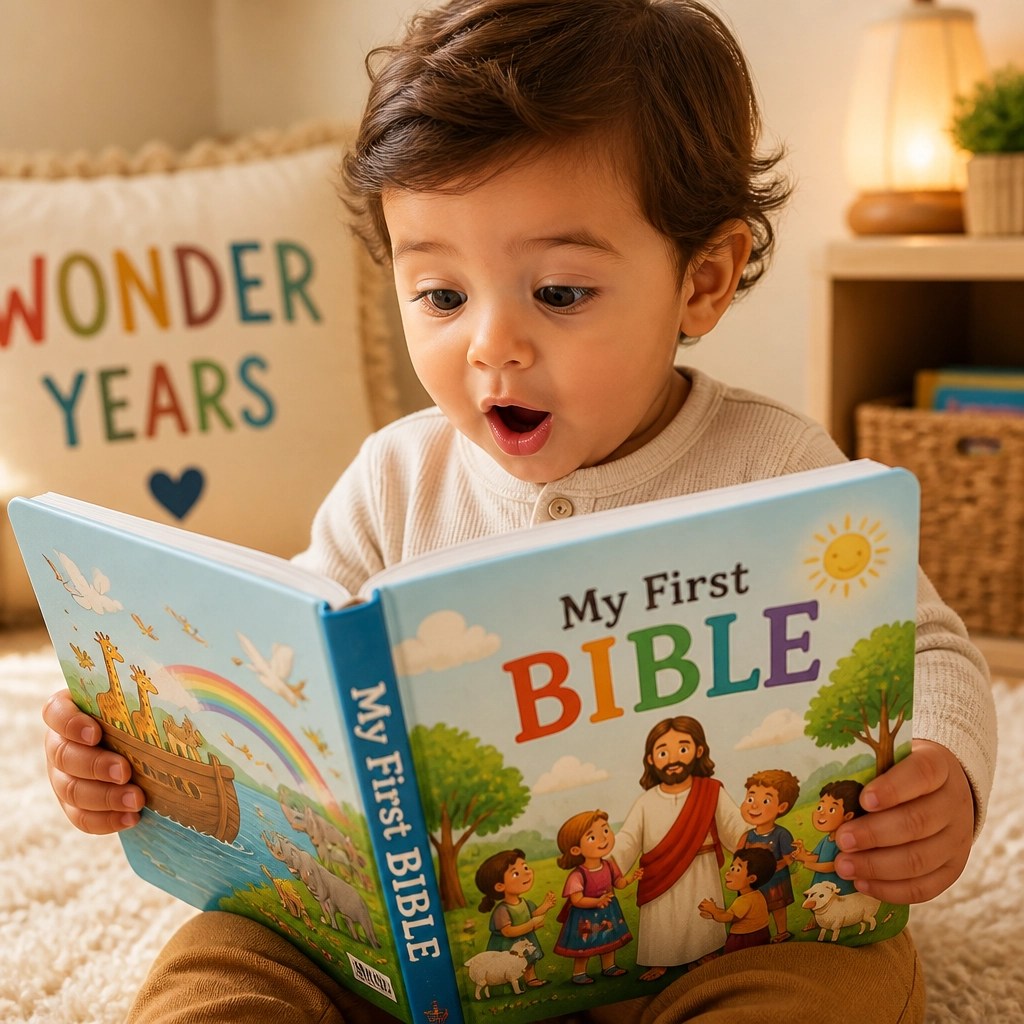
Stage 1: The Wonder Years (Ages 0–6)
In this early season, your primary goal is simple: Exposure and Atmosphere.
For a toddler or preschooler, faith isn't about deep theological study; it’s about wonder. It’s about learning that God is good, He made them, and He loves them. At this stage, you are the primary "priest" in their life. They see God through your eyes, your voice, and your cuddles.
What Discipleship Looks Like Now:
- Storytelling: Using Bibles with big, bright pictures. We focus on the "big stories", Noah’s Ark, David and Goliath, and especially the stories of Jesus. (If you have little ones in this stage, check out our resources for Ages 0 to 3).
- Sensory Faith: Singing songs like "Jesus Loves Me," acting out Bible stories with toys, and pointing out God’s handiwork in nature during walks.
- Short & Sweet: Prayers are brief, usually a "thank you" for the day or for a meal.
In this stage, you are doing 90% of the heavy lifting. You are reading to them, praying over them, and setting the stage. But as they hit that 7 or 8-year-old mark, a shift begins to happen.
Stage 2: The Big Pivot (Ages 7–10)
This is often the most challenging but exciting transition. Around age 7 or 8, children begin to develop a stronger sense of independence. They are reading more fluently, they are asking "why," and they are starting to form their own thoughts about the world.
This is the season where we move from "I lead you" to "I show you how to lead yourself."
I remember when my own children reached this age. I realized that if I kept doing everything for them, they would never learn how to talk to God on their own. We had to pivot from just reading Bible stories together to teaching them how to spend their own independent time with the Lord.

The Tool: The Quiet Time Box
One of the most practical ways to navigate this pivot is by introducing a Quiet Time Box. This isn't just a container; it's an invitation for them to own their faith.
Here is what you might include in a Quiet Time Box:
- A Child-Friendly Bible: Something they can read themselves.
- A Journal or Notebook: For drawing or writing thoughts.
- Colored Pencils/Pens: To make it creative.
- A Visual Timer: This is key! Start with just 10 or 15 minutes. It helps them see that "quiet time" has a beginning and an end.
- Simple Prompts: A small card that says: 1. Read a story. 2. Write one thing God did. 3. Say thank you.
The goal here is consistency over intensity. We want them to find joy in being alone with God. For more tips on how to implement this at home, you can explore our guide on how to Teach Faith at Home.
Stage 3: The Ownership Years (Ages 11+)
As children move into their tween and teen years, the pivot shifts again. Now, the focus is on Mentorship and Relationship.
At this stage, they are dealing with bigger questions, social pressures, and the need to decide if the faith of their parents is going to be their faith. If we stay in "teacher mode," we might find them pulling away. Instead, we need to move into "coach mode."

What Discipleship Looks Like Now:
- Hard Questions: Encouraging them to ask the tough "why" questions. We don't have to have all the answers, but we need to be the safe place where they can ask.
- Joint Devotionals: Instead of you teaching a lesson, try reading a book or a Bible plan together and discussing it as equals.
- External Resources: Introducing them to wider communities of faith. Our Kids and Teens Bible World is a great place to find content that resonates with this age group.
- Modeling Integrity: They are watching you more than ever. They need to see how you handle stress, how you apologize when you're wrong, and how you lean on God in your own life.
Embracing the Season You’re In
Parent, if you feel like your current routine isn't working, please hear this: It’s okay to change.
You haven't failed because your 10-year-old is bored with the picture Bible. You’ve simply reached the end of a season. It is a sign of growth!
The beauty of intentional godly parenting is that it is a journey we take with our children. We are growing alongside them. Some days will feel like a spiritual mountain top, and other days will feel like you're just trying to get through a 5-minute prayer without someone getting poked in the eye.
Both days are holy. Both days matter.
A Few Practical Tips for the Journey:
- Start Small: When pivoting to a new style, don't try to do a 1-hour family devotion. Start with 10 minutes of "independent quiet time" once or twice a week.
- Be Personal: Share your own struggles and victories. Let them know that you are also learning how to follow Jesus every day.
- Use Tools: You don't have to reinvent the wheel. Whether it's our Preparation for Godly Parenthood Course or creating a Family Handbook, use the resources available to help you find your footing.
Whatever season you find yourself in today: whether you’re wiping crumbs off a high chair or waiting up for a teenager to come home: know that God is with you. He is the ultimate Father, and He is cheering you on as you lead your children home to Him.
Keep going, keep pivoting, and keep loving. You’re doing a great job!
Which season are you currently in? Have you tried a "Quiet Time Box" yet? I’d love to hear your stories in the comments!